Sunday, February 12, 2012

Stafford Cemetery


The Stafford Cemetery is located a short distance south of the main house, Stafford Mansion. Robert Stafford was the leading planter and the largest landholder with up to 350 slaves on Cumberland Island in the nineteenth-century. He is buried in the cemetery along with his mother and his sister. The cemetery is enclosed by tabby block walls and there are four marked gravesites located inside. 


Sacred
to the memory of
ROBERT STAFFORD
Born on
Cumberland Island, Ga.
Dec. 8th, 1790
and died
Aug. 1st, 1877


One of the gravesites
located within the walled cemetery 
is not a member of the Stafford family.


Tom Hutchison was William C. Carnegie's personal golf coach and the golf pro at Shinnecock Hills Golf Club at Southampton, NY.  William had a nine-hole golf course in one of Robert Stafford's large plantation fields next to the Stafford mansion. A golf professional from Scotland, he was killed when thrown from a horse while visiting with William on Cumberland.


For more information on the
life of Robert Stafford,
read Mary R. Bullard's book:
Robert Stafford of Cumberland Island

Monday, February 6, 2012

Hunting Seashells

Last August my friend Beth and I were on the island the day after Hurricane Irene had marched up the coast and skirted past the islands of Florida and Georgia. Beth, the editor of our local newspaper, had an appointment on Cumberland and invited me to tag along. With our beach paraphernalia in tow, we took the ferry over to Cumberland planning for a relaxing day on the beach before her meeting the next day. In route, we met a wonderful lady AKA "Susan" and we chatted on the cruise ride over to the island. Arriving at the Sea Camp Dock and unloading our gear, we descended upon the dock.  Knowing our plans for the day, Susan asked us if we wanted do something different.  Something different? Heck yeah! Turns out that Susan had a car.  We piled into the vehicle with a new planned agenda of hunting seashells and set out north on the isle to conquer Stafford Beach.


A small lion in the oak forest  stands watch overlooking the narrow road that leads to Stafford Beach.


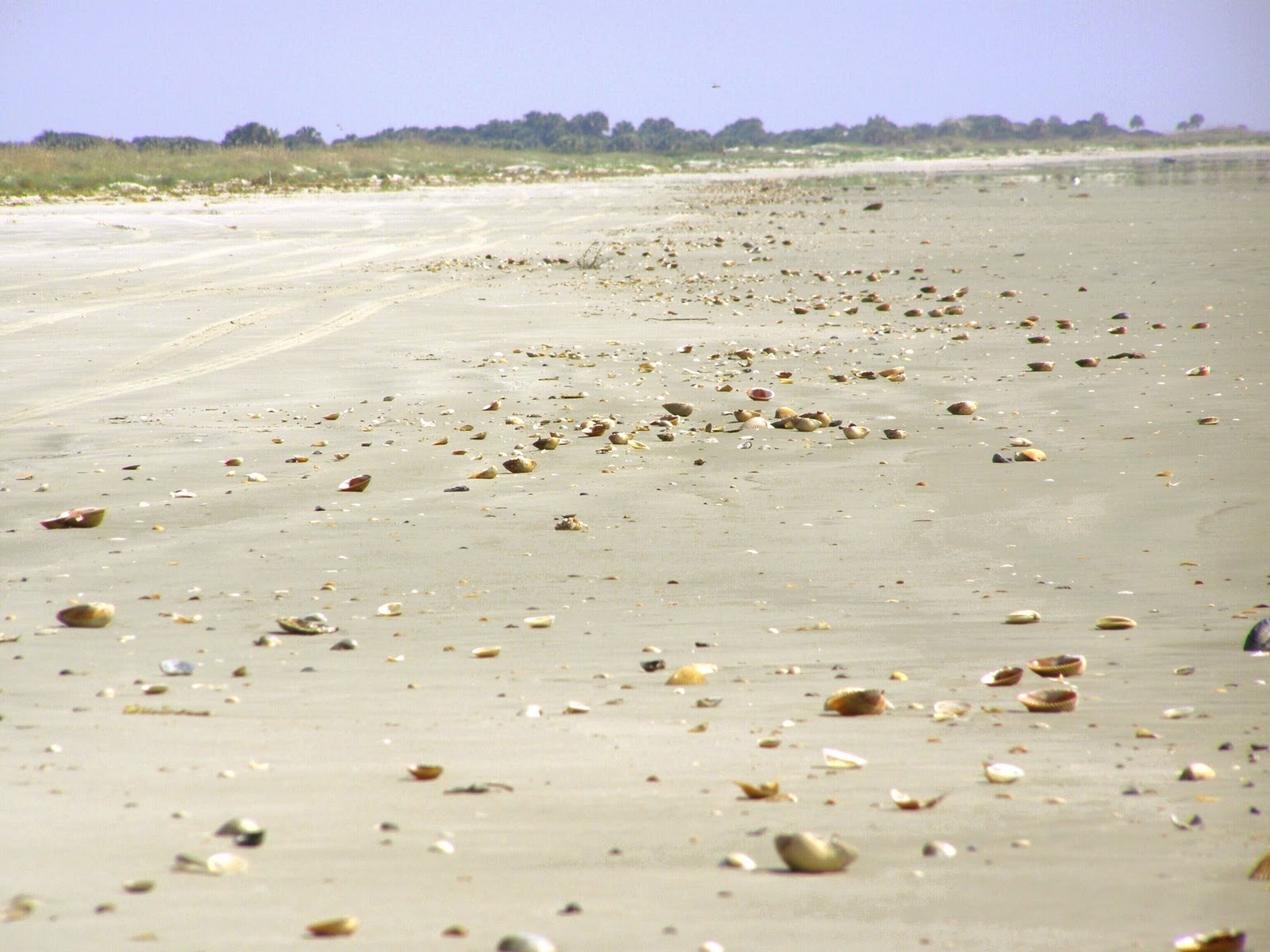
Leaving the dunes behind us, we were in shock and could only smile in disbelief at that variety of seashells that had washed ashore.


After a few hours of hunting and eating our packed lunch, we set out southward to Little Greyfield Beach. The drive off the Main Road that leads you to the beach and through the dunes is one of the most beautiful spots on the island.


Millions of empty shells had been dredged up off the depths of the ocean floor by the churning ocean water. Many shells with living critters and other interesting things were deposited along the beach.  


That Sunday, we had some good pickin’s along
the coast of Cumberland Island.
Thank you Susan for a wonderful day!

Thursday, January 12, 2012

The Grange - Views From The House

 Looking across Beach Creek


July of 2011, the National Park Service released their proposed plan for the Former Reserved Properties Management Plan.  Their recommendation, open up The Grange tract to the public for visitors services, education, and activities. By law, the NPS received the tract upon the expiration of a Retained Rights Agreement by a descendant of Thomas and Lucy Carnegie, Lucy C. J. Graves.  

With this addition of The Grange Tract within the NPS hands, the historical integrity of the Dungeness Complex is now one cohesive group. The Grange lies in the heart of a complex system of other structural outbuildings that help to create a varied facade for the operations of the infrastructure of the Dungeness Estate in the late 19th and 20th century.
A view from the rooftop

 The NPS will now be responsible for renovating the historic structure within the Dungeness Historic District. Due to several rehabilitations over the years by the Graves family and others, The Grange is in very good condition.
One of the issues at this time is the limited funding that is dedicated to the Cumberland Island National Seashore (CUIS). There are 396 other areas within the National Park System that need to be funded during this downturn in the economic. BTW - Cumberland Island is one of just ten designated National Seashores.

The other issue is a frequently used tool of leases and other agreements by the NPS to help defray the burden of management and over time, continued maintenance costs. Indiana Dunes, Point Raise, Apostle Islands and other areas within the park system have lease agreements. 
 
Rooftop view, Dungeness ruins in the distance

An issue that needs to be considered by the NPS in this critical planning process is that in the future, retained estate tracts at Stafford and tracts located behind Plum Orchard will expire. Several structures in the leased areas of the complex behind Plum Orchard have already deteriorated. More burden will be placed upon CUIS and the park service when these newly acquired historical estate structures come into their hands.

Leases are effective but just what kind?

Antietam Battlefield has leases. One of the major battles at this historic site was fought in the cornfields.  The NPS needs corn for the environmental effect, so they lease the land to farmers to grow the corn so that it will appear to look like the battlefield at that time.

Regardless of whatever the NPS decides, all parties will not be satisfied.